
Food & Beverage FRP Grating Solutions
Why Food & Beverage Needs FRP
Food processing environments demand flooring that is hygienic, non-absorbent, and easy to clean with aggressive sanitizers. Steel rusts, wood harbors bacteria, and concrete cracks. FRP grating provides a smooth, cleanable surface that shrugs off washdown chemicals.- Sanitizer and washdown chemical attack
- Bacterial harborage in porous surfaces
- Slip hazards in wet processing areas
- Flooring that must withstand constant cleaning
ZeAllgrate Solutions for Food & Beverage
ZeAllgrate molded grating with fine-mesh or grit-top surfaces, non-absorbent construction and FDA-compliant resin options keeps food plants clean, safe and compliant.
Typical Applications
Processing area floors
Packaging line platforms
Drain covers & gutters
Washdown areas
Cold storage mezzanines
Utility walkways
Project Gallery
Real ZeAllgrate FRP grating products and installations in service across this industry.
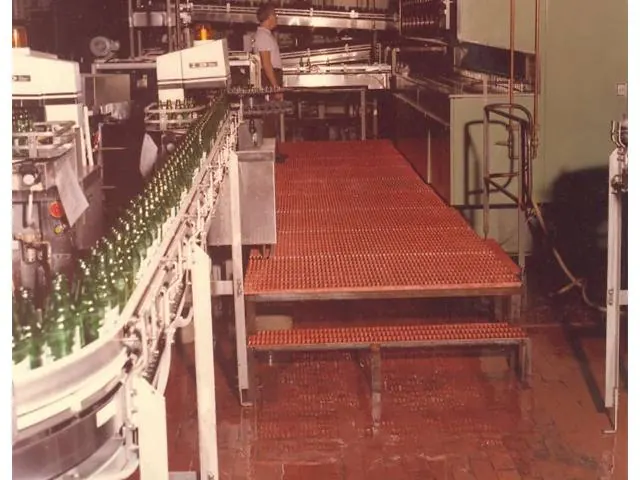
FRP grating platform in a food and beverage bottling plant
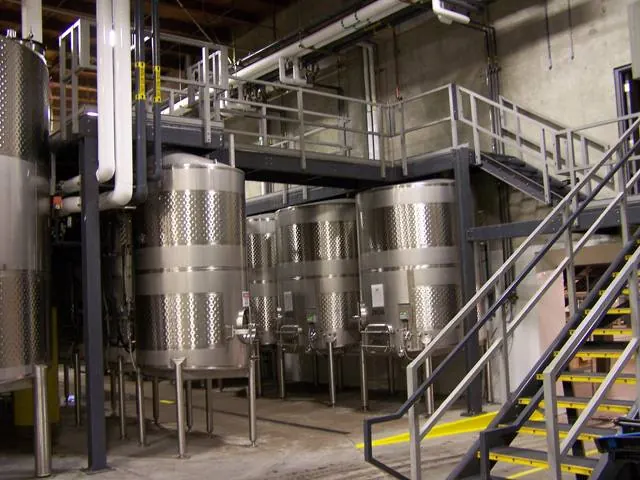
Beverage process tanks with FRP access platforms and stairs
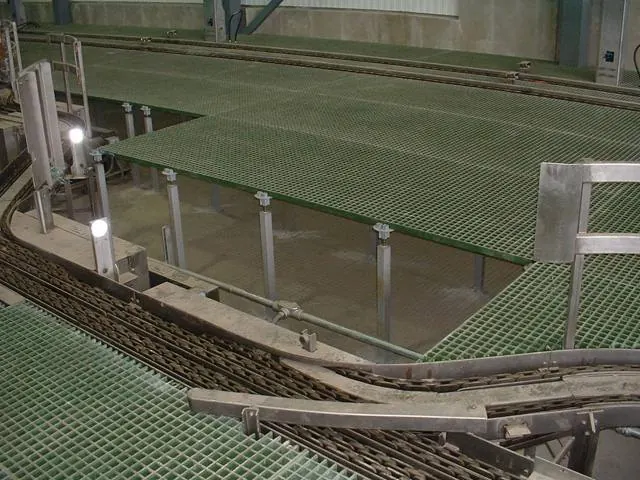
FRP grating platform along food processing conveyor lines
Solutions for Every Process Area
Engineered FRP solutions mapped to each stage of your facility — from corrosive process zones to high-traffic access routes.
Hygienic, slip-resistant flooring grating in wet processing areas.
High-pressure washdown platforms resistant to caustic cleaners.
Elevated walkways over conveyor and packaging equipment.
Non-conductive walkways that do not frost or corrode in cold stores.
Technical Specifications & Compliance
Application-specific engineering reference for Food & Beverage — corrosion rating, load criteria, governing codes and the recommended ZeAllgrate configuration. Use this as the specification starting point; final design must be verified against certified load/span charts and the project's governing codes.
| Parameter | Specification for Food & Beverage |
|---|---|
| Corrosion Level | Medium Frequent washdown with caustic/acidic sanitizers, high humidity, but no continuous aggressive chemical immersion. |
| Typical Load Requirements | Processing-floor pedestrian 50 psf (2.4 kN/m²); packaging & mezzanine platforms 100 psf (4.8 kN/m²); pallet-truck traffic on designated aisles. |
| Applicable Standards & Regulations | FDA 21 CFR 177 (food-contact polymers), USDA FSIS compliance, NSF/ANSI 51 (food equipment materials), 3-A Sanitary Standards, NSF/ANSI 61 (if potable water), OSHA 1910.22 walking-working surfaces. |
| Recommended Resin System | ZeAll FDA (food-grade isophthalic) — non-absorbent, cleanable, approved for food-contact wet areas; ZeAll ISO where no direct food contact. |
| Recommended Grating Type | Molded 38.1 mm Mini-Mesh or smooth-top for hygienic flooring & drain channels; grit-top only where wet-floor slip risk dominates over cleanability; Pultruded for elevated packaging-line walkways. |
Resin systems: ZeAll VE (vinyl ester — severe corrosion), ZeAll ISO (isophthalic polyester — general service), ZeAll FDA (food/potable grade), ZeAll FR (extra flame-retardant), Phenolic (fire/smoke-critical). Grating types: Molded (bi-directional), Pultruded (long-span), Mini-Mesh (fine openings), HLC (high-load capacity).
Typical System Configuration
A hygienic, washdown-rated FRP flooring package for a food processing hall — FDA-grade molded grating with mini-mesh, electropolished handrail, solid production covers and smooth, crevice-free edge banding. Surfaces are chosen for cleanability and to prevent object fall-through, with SS316 hardware that survives caustic and acid sanitizers.
Component List
| Component | Product / Model | Material / Resin | Key Spec | Quantity / Ratio |
|---|---|---|---|---|
| Grating panels | ZeAllgrate Molded 38mm, mini-mesh 19×19 | ZeAll FDA, smooth (food zones) + grit-top (wet walkways) | 38.1 mm thick, 19×19 mini-mesh openings | Processing floors and drain channels |
| Handrail system | ZeAll FDA tube handrail | ZeAll FDA tubes, SS316 electropolished fittings | Radiused, crevice-free joints | Perimeter and open edges |
| Solid covers | Solid covers | ZeAll FDA, smooth non-porous | Production areas | Floor openings and channels |
| Clips & fasteners | G-type panel clips | SS316 electropolished | Hygienic, washdown-proof | 2 clips per panel |
| Edge banding | FRP edge banding | ZeAll FDA, smooth, no crevices | Cleanable, non-porous trim | Panel perimeter |
Design Parameters Summary
| Design Parameter | Value for Food & Beverage |
|---|---|
| Load rating | Pedestrian + cart 4.0 kN/m² (~84 psf) |
| Span | 0.8 m panel span |
| Deflection limit | L/150 under design load |
| Resin selection rationale | FDA food-contact grade (ZeAll FDA), compliant with 21 CFR 177.2420 |
| Surface type | Smooth for cleanability; mini-mesh 19×19 to prevent object fall-through |
| Fastener material | SS316 electropolished for high-pressure washdown |
Applicable Standards & Codes
- FDA 21 CFR 177.2420 (food-contact polymers)
- OSHA 1910.23 / 1910.22 (walking-working surfaces)
- ISO 14122-1/-2/-3/-4 (permanent machinery access)
- 3-A Sanitary Standards (where hygienic equipment applies)
- NSF/ANSI 51 (food equipment materials)
Food flooring is a cleanability problem first, a corrosion problem second. A smooth, non-absorbent FDA-grade surface prevents bacterial harborage, the 19×19 mini-mesh keeps tools and packaging scraps from dropping into drains while still draining wash water, electropolished SS316 hardware survives caustic/acid sanitizer cycles without pitting, and radiated handrail joints and smooth edge banding eliminate the crevices inspectors flag. The shorter 0.8 m span reflects cart and pallet-truck point loads rather than pure pedestrian crowding.
Food Plant Service Requirements
| Requirement | ZeAllgrate Response |
|---|---|
| Washdown & cleaning chemistry | Resin matched to the cleaning list (vinyl ester for bleach) |
| Hygiene & drainage | Open mesh for drainage; flush covers; no rust staining |
| Slip resistance when wet | Grit-top surfaces on floors and platforms |
| USDA / FDA-style cleaning | Smooth cleanable surfaces where product contact applies |
Specification Guidance
Food plants are won on the cleaning chemistry, not just the floor: verify the sanitiser and bleach programme against the resin compatibility chart, specify vinyl ester where hypochlorite or aggressive cleaners run, and grit-top the wet zones. Open-mesh drainage and flush trench covers keep the floor dry and safe; handrail and pultruded framing complete a corrosion-proof package that never needs repainting around product lines. Case studies in the library document washdown-floor and brewery installations.
Go Deeper with the ZeAllgrate Knowledge Base
Hygiene Design: Why Mini-Mesh in Washdown Zones
Food and beverage washdown floors see daily high-pressure caustic wash (5% NaOH, 60 °C), animal fats, and cold-room condensation. Standard 38×38 mm molded grid traps food particles in the openings and harbours bacteria. We specify 19×19 mm mini-mesh GRP molded panels with coved 45° cut edges in washdown zones. The smaller mesh drains instantly, prevents hoof/utensil snag, and has no crevices for bacterial growth.
| Zone | Attack | Panel spec | Surface | Hardware |
|---|---|---|---|---|
| Raw meat washdown | NaOH + fat + blood | 19×19 mm mini-mesh vinylester | Smooth white gel-coat top | SS316 |
| Brewery / CIP area | CIP acid (HNO₃) + NaOH | 38×38 mm vinylester molded | Grit-top R11 | SS316 |
| Cold room / freezer | Condensation, −25 °C | 38 mm isophthalic molded | Grit-top, R12 wet | SS316 |
| Dry packaging hall | Dry, dust | 38 mm isophthalic molded | Standard grit | SS304 acceptable |
Food-Grade Resin: What "Food Contact" Actually Means
Food safety regulations (EU 10/2011, FDA 21 CFR) cover materials that touch food directly. GRP flooring in a washdown zone does not touch food for long — but the resin must not leach under repeated caustic wash. We specify vinylester (not general-purpose polyester) in any zone where washdown chemicals could leach styrene or fillers. Contact engineering for direct-food-contact applications — we will issue a specific compliance statement.
- Do not use isophthalic standard grade in raw-meat washdown — it can hydrolyse under 5% NaOH at 60 °C.
- Do seal every cut edge with food-grade resin gel-coat to prevent bacterial harborage.
- Do specify light-gray or white gel-coat top for visual contamination control.
- Do use bonded FRP handrails instead of painted steel — no chipping, no rust in washdown.
Reference: UK Poultry Processing Line
A UK poultry processing line replaced its steel slatted floor after one winter of corrosion from caustic wash and blood. We supplied:
- 3,500 m² of 19×19 mm mini-mesh vinylester molded panels.
- Coved 45° cut edges to eliminate bacterial crevices.
- White gel-coat top for visual contamination control.
- SS316 G-clips at every support intersection.
Audit result: zero bacterial harborage points in floor joints, no repaint cycle, no replacement needed after 4 years. GRP grating clips and trench covers were supplied as a package.

Hygiene Audits: What the Inspector Looks At
Retail brand audits (BRC, IFS, FSMA) inspect floor joints, edge details, and drainage. FRP grating floors pass where steel slatted floors fail. Four audit points we design for:
| Audit point | What inspector checks | ZeAllgrate spec |
|---|---|---|
| Floor joint gap | Openings > 6 mm trap product | 19×19 mm mini-mesh in washdown; 38×38 mm in dry zones |
| Cut edge detail | Sharp 90° edge traps bacteria | Coved 45° cut; sealed with food-grade gel-coat |
| Drainage slope | Standing water after washdown | 38×38 mm mesh drains instantly; no standing water |
| Rust streaks | Clip corrosion runs onto floor | SS316 clips only in washdown; no hot-dip galvanized |
CIP and Acid Wash: Resin Selection
Clean-in-place (CIP) systems cycle 1–2% NaOH at 60–80 °C followed by 0.5–1% nitric acid at 60 °C. Standard isophthalic polyester hydrolyses under this cycle within 2–3 years. We specify vinylester (bis-A epoxy) in any CIP washdown zone:
- Raw meat / poultry washdown: vinylester, 19×19 mm mini-mesh, white gel-coat top.
- Brewery / dairy CIP: vinylester, 38×38 mm mesh, grit-top R11.
- Fruit / vegetable processing (acidic): vinylester, 38×38 mm mesh, smooth top.
- Dry packaging hall: isophthalic acceptable — no caustic wash, no acid.
All panels ship with COA. For direct-food-contact zones (e.g. grist floors in a brewery), ask engineering for a specific EU 10/2011 or FDA 21 CFR compliance statement — we will not claim compliance we cannot document.
Specification Checklist for Food-Grade FRP
Food-grade specs fail when hygiene details are left to the installer. Confirm every item:
- Zone: raw washdown, CIP/brewery, cold room, dry packaging. Each has a different resin and mesh spec.
- Mesh size: 19×19 mm mini-mesh in washdown (no product trap, no bacterial harborage); 38×38 mm in dry zones.
- Resin: vinylester in any caustic wash or CIP acid zone; isophthalic acceptable only in dry packaging halls.
- Cut-edge detail: coved 45° on every cut; sealed with food-grade resin gel-coat. Sharp 90° edges fail BRC audit.
- Surface colour: white or light-gray gel-coat top for visual contamination control.
- Hardware: SS316 only in washdown. Never hot-dip galvanized — chipping creates rust streaks on the floor.
- Direct food contact: if the panel touches food for more than incidental contact, contact engineering for a specific EU 10/2011 or FDA 21 CFR statement.
Send the checklist to sales@zeallgrate.com. We return a stamped hygiene specification within 48 hours.
FRP vs. Slatted Steel in a Washdown Zone
Slatted steel floors in a washdown zone look the same as GRP at first glance — but they fail hygiene audits and corrode in 2–3 years. The difference is in the details.
| Factor | Slatted steel | Vinylester GRP mini-mesh |
|---|---|---|
| Mesh opening | Typically 30×30 mm | 19×19 mm (no product trap) |
| Cut edge | Sharp 90° = bacterial harborage | Coved 45° + gel-coat seal |
| Caustic wash (5% NaOH, 60 °C) | Corrodes in 2–3 years | Vinylester handles it |
| Rust streaks on floor | SS304 clips pit; streaks | SS316 clips; zero streaks |
The UK poultry reference replaced steel after one winter of corrosion; the 3,500 m² vinylester mini-mesh install has run zero audit findings in 4 years.
Have a Food & Beverage Project?
Send us your application and environment details — our engineers respond within 24 hours with a technical solution.
Why FRP Grating for Food & Beverage?
FRP grating for food and beverage: FDA-compliant vinyl ester resin, washdown-friendly, anti-slip surfaces. No rust, easy to clean, hygienic for food processing.